
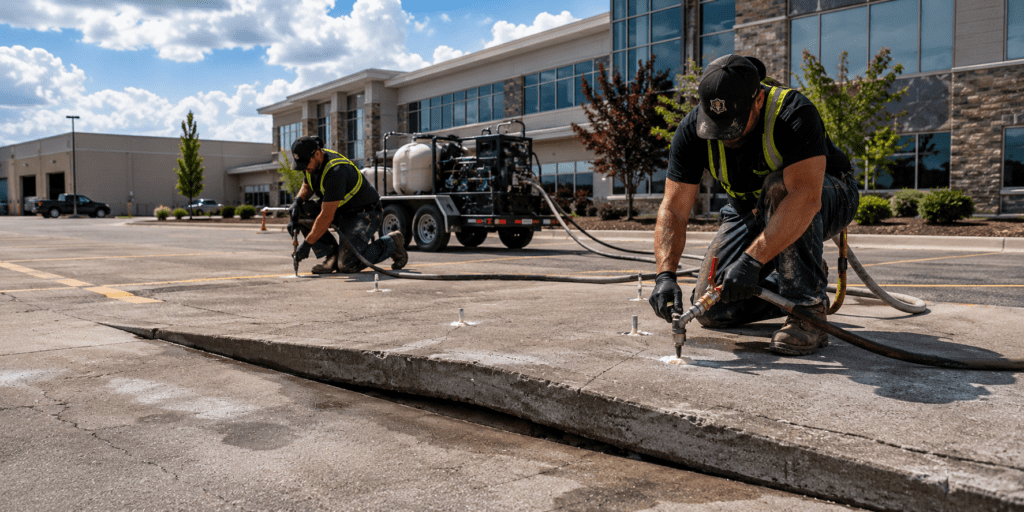
When commercial concrete sinks, you face costly liability, tenant loss, customer complaints, and budget strain. A sunken entryway causes trips. A settling parking lot damages vehicles and creates negligence claims. Warehouse floors buckling under equipment cost money to fix.
You need a solution that works quickly, costs less than replacement, and actually solves the problem rather than masking it.
This is where professional concrete lifting changes the game, offering a smarter approach.
Why Commercial Concrete Sinks (And Why Standard Fixes Fall Short)
Commercial concrete doesn’t settle randomly. Understanding what’s actually happening beneath your slabs explains why some repair methods fail while others succeed.
The Real Culprits Behind Sinking Concrete
Soil beneath commercial concrete compresses gradually under the weight of daily operations—vehicle, foot, and equipment traffic, and weather cycles. Unlike residential properties, where settlement is often isolated to a few areas, commercial sites experience uniform pressure across parking lots, loading docks, and entryways. This creates a scenario in which the entire surface can settle, not just portions.
Moisture movement is another major factor. Excessive rainfall, poor drainage, underground water flow, or leaking plumbing erode soil particles, leaving voids beneath the slab. The concrete doesn’t crack at these voids—it quietly sinks into them. What looks like a localized depression is often a symptom of a much larger problem spreading beneath the surface. In Utah’s Wasatch Front region, where we operate Rhino Foundation Systems, seasonal freeze-thaw cycles make this worse. Water penetrates cracks, freezes, expands, and thaws repeatedly, destabilizing the soil below.
Tree roots can also undermine concrete, particularly around older commercial properties. As roots grow, they physically displace soil and create pathways for water infiltration.
Why Replacement Concrete Doesn’t Stop the Problem
Here’s the critical flaw in standard replacement approaches: pouring new concrete over settling soil doesn’t address the fundamental issue. You’re adding more weight to already-compromised Earth.
Replacement also means:
- Multi-day cure times. Your parking lot, entryway, or warehouse is unusable for 7–14 days, depending on conditions.
- Color and texture mismatches. New concrete never quite matches old, creating a visible reminder of the repair.
- Temporary relief. The new slab will settle again if the underlying soil problem isn’t fixed.
- Costs that spike. Concrete replacement costs 3–5 times as much as leveling for the same square footage.
For commercial properties where every day of downtime affects operations or tenant satisfaction, replacement falls short. Instead, you need a method that lifts what’s already there, stabilizes the soil beneath, and gets your surface back in service within hours.
Concrete Lifting: How It Actually Works
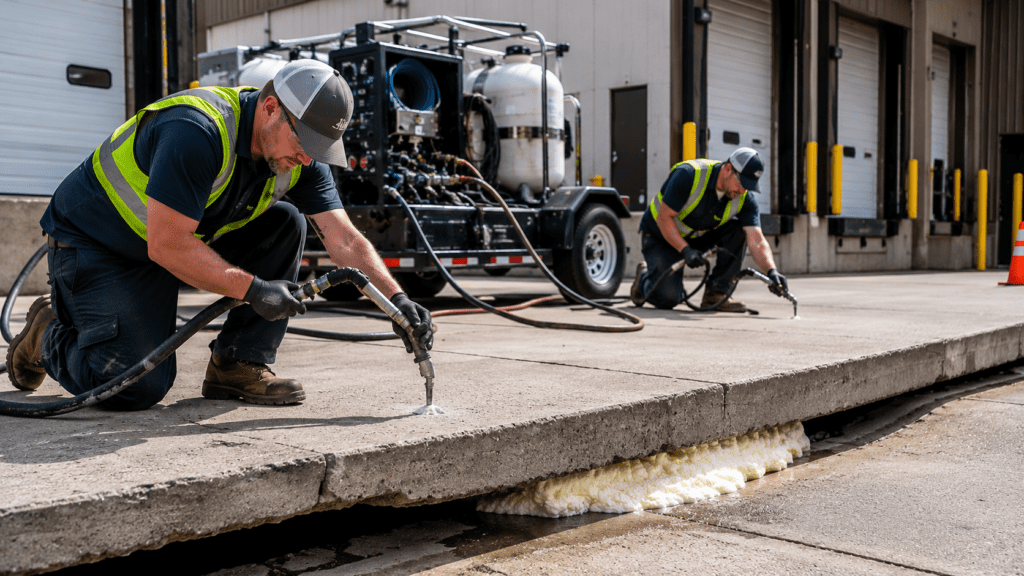
Concrete lifting is engineered simplicity. Instead of removing and replacing slabs, technicians inject specialized material beneath the surface to fill voids and restore the slab to its original elevation. The process takes hours, not weeks.
The Three Proven Methods (And Why They’re Not All Equal)
To choose the right solution, it’s important to know the three distinct methods commonly used in the industry, each with unique strengths for different situations:
Mudjacking: The Traditional Approach
If you have one diagonal crack that’s been the same size for years and hasn’t grown, this is likely from normal settling or concrete curing. Continue to monitor it, but it doesn’t demand immediate action.
Very Fine Cracks in Finished Basement Walls
Mudjacking involves pumping a slurry—a mixture of water, soil, sand, and Portland cement—beneath sunken concrete. Technicians drill 1- to 2-inch holes, pump slurry beneath the slab until it reaches the correct height, then patch the holes.
Advantages: Lower cost for large areas, proven track record spanning decades.
Limitations: The slurry is heavy, adding significant weight to already-compromised soil. The mixture can shrink as it cures, allowing the concrete to settle again. Requires 7–10 days of cure time before the surface is fully usable. Large drill holes leave visible scars on the concrete.
Cement Slurry Lifting: The Middle Ground
A refinement of mudjacking, cement slurry uses a finer mixture with less aggregate, flows more easily through smaller holes, and bonds better with existing soil. Cure time is faster—typically 24–48 hours.
Advantages: Smaller injection holes than mudjacking. Good for mixed-use spaces where faster turnaround matters. Less weight than mudjacking slurry.
Limitations: It still adds significant weight to soil. Concrete can resettle if the underlying soil conditions aren’t truly stabilized. Requires moderate downtime.
Very Fine Cracks in Finished Basement Walls
Polyurethane Foam Lifting: The Modern Standard
Polyurethane foam injection is a modern concrete repair method. Instead of using heavy slurry, technicians inject liquid polyurethane through small holes. The material chemically expands into foam, fills all gaps (voids) under the slab, and hardens in place. (Polyurethane: a type of plastic that expands and solidifies on contact).
Advantages that matter for commercial properties:
- Immediate usability. The foam cures in 15–30 minutes. Your surface is ready for foot traffic immediately and vehicle traffic within an hour.
- Minimal holes. Dime-sized injection points are inconspicuous, especially once sealed and cleaned.
- Lightweight. Unlike slurry, foam doesn’t add crushing weight to weak soil. This is the critical difference—you’re lifting without exacerbating the underlying problem.
- Hydrophobic. The foam repels water, meaning future moisture intrusion won’t reactivate settling.
- Precision control. Technicians can inject in a grid pattern, monitoring pressure and lift in real time to achieve millimeter-perfect elevation.
- Permanence. Foam doesn’t shrink, absorb water, or compact over time. Your repair stays level.
At Rhino Foundation Systems, we’ve standardized polyurethane foam lifting for commercial applications. The math is straightforward: faster repairs, lower long-term costs, zero weight penalty, and lasting results outweigh the slightly higher upfront material cost.
The Commercial Concrete Repair Process: What to Expect
A professional concrete lifting project isn’t mysterious. Here’s what you can expect, step by step.
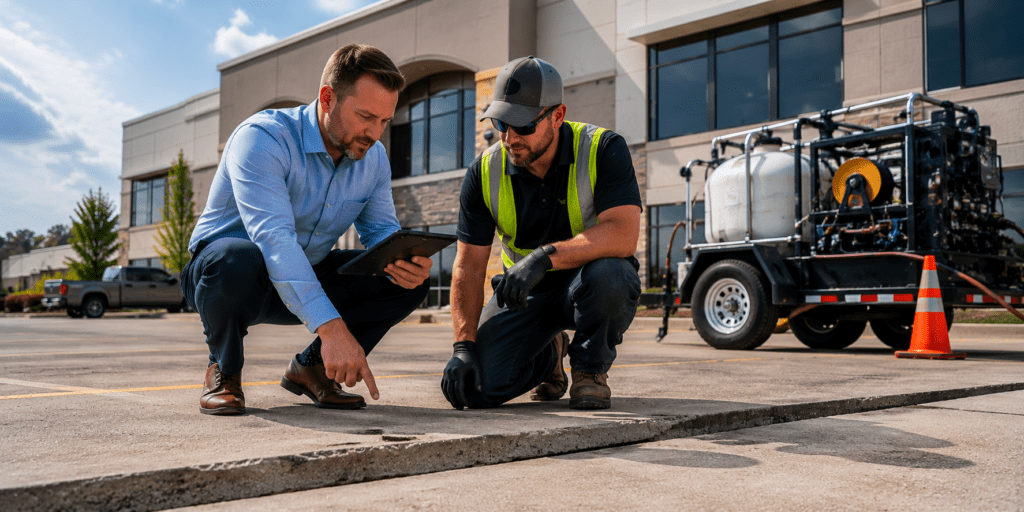
Phase 1: Assessment and Measurement
Before any drilling or injection, the team performs a comprehensive evaluation. This involves:
- Elevation mapping. Using laser levels or transit equipment, technicians measure the extent of the concrete's sinking. This data guides the injection grid.
- Void identification. We look for cracks, water staining, or soft spots indicating where voids are likely concentrated.
- Soil evaluation. For commercial properties, understanding what’s beneath matters. Is it clay? Sand? How much compaction has occurred? This informs material selection and lift expectations.
- Cause analysis. We determine whether the problem is drainage-related, weight-related, soil composition-related, or seasonal. Diagnosing the root cause prevents a repeat problem.
For a typical commercial entryway or parking lot section, this assessment takes 30–60 minutes.
Phase 2: Injection Planning
Once we understand the problem, we plan the injection grid. For foam lifting, holes are typically spaced 3–4 feet apart and positioned to create a balanced lift pressure across the entire slab. We mark these locations on the concrete, and we discuss the plan with you before beginning.
Phase 3: Drilling
Technicians drill small-diameter holes at each marked location. For polyurethane foam, these holes are dime-sized (⅜–½ inch). Drilling is quiet and produces minimal dust, meaning operations can continue nearby.
Phase 4: Foam Injection and Monitoring
This is where precision happens. Using specialized pump equipment, technicians inject polyurethane foam through each hole in a calculated sequence. As the foam expands beneath the slab, it creates lift pressure. Technicians monitor this pressure in real time, adjusting injection rates to lift the concrete gradually and evenly.
The goal isn’t to lift overnight—it’s to lift correctly, bringing the slab back to proper elevation without over-lifting or creating stress fractures. For large areas, this might require 8–12 injection points with careful sequencing.
Phase 5: Hole Sealing
Once the concrete reaches target elevation, technicians seal injection holes with concrete repair compound or epoxy. These patches cure quickly and blend with the existing concrete. Unlike mudjacking, the patches are nearly invisible.
Phase 6: Cleanup and Final Inspection
The work area is cleaned, and a final elevation check confirms the repair meets specifications. For polyurethane foam, your surface is ready for immediate use.
Why Commercial Property Managers Choose Professional Lifting
Beyond speed and cost, a few specific reasons drive this preference:
Liability Protection
Sunken concrete is a documented hazard. If a customer, vendor, or employee is injured on your property due to uneven pavement, your insurance carrier examines whether you knew about the hazard and failed to address it. Property managers who maintain detailed records of hazard identification and timely repairs demonstrate reasonable care. Quick concrete lifting—documented with before-and-after photos and work orders—provides the paper trail that protects you legally.
Commercial liability claims from slip-and-fall injuries on concrete cost an average of $15,000–$40,000 in legal fees and settlements, even when the property owner ultimately prevails. Investing $2,000–$5,000 in preventive concrete repair is dramatically cheaper than defending a claim.
Operational Continuity
A warehouse floor with a sunken section creates a tripping hazard for forklift operators and foot traffic. A parking lot with a settling depression collects water, damaging vehicles and creating an appearance problem that affects tenant morale. An uneven commercial entryway sends a message about poor maintenance.
Concrete lifting solves these problems in hours, not weeks. Your operations never stop.
Tenant Retention
Retail tenants and office lessees care about the condition of the property. Visible concrete problems—cracks, uneven surfaces, pooling water—suggest neglect. Properties that quickly address these issues retain tenants at higher rates. The tangible message: “This owner maintains this building properly.”
True Cost Economics
A sunken concrete section might appear to be a cosmetic issue. Until someone gets injured. Or water damage accelerates. Or tenant turnover increases. Professional lifting prevents these downstream costs by addressing the problem when it’s still contained.
Consider the numbers:
- Concrete lifting (polyurethane foam): $3–$8 per square foot, takes hours.
- Concrete replacement: $15–$25 per square foot, takes 7–14 days plus cure time
- Litigation over slip-and-fall injury: $15,000–$100,000+
- Lost tenant revenue due to downtime: $5,000–$50,000+ per day, depending on property type
The choice becomes obvious.
Utah-Specific Factors: Why Concrete Problems Get Worse Here
The Wasatch Front region—where Rhino Foundation Systems operates—presents specific challenges for concrete longevity that commercial property owners should understand.
Freeze-Thaw Cycling
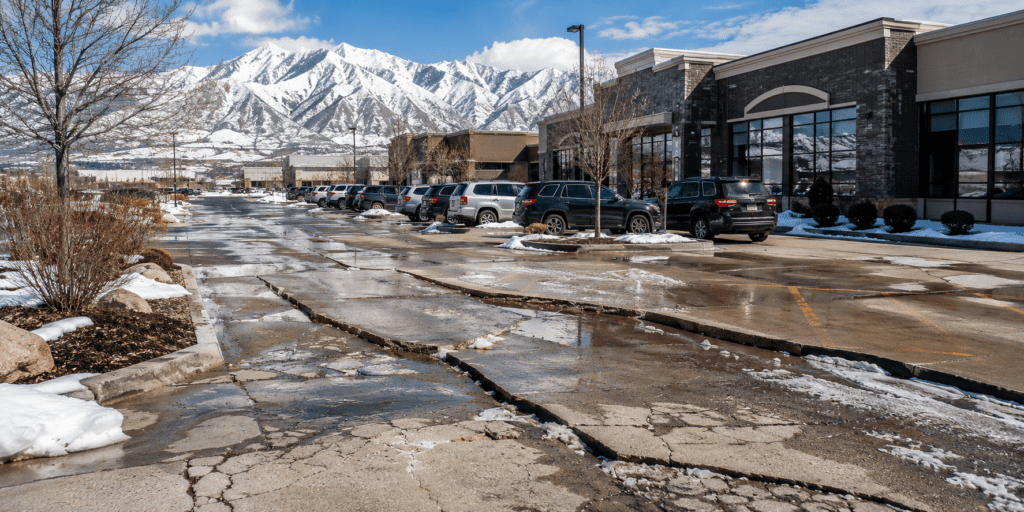
Utah winters are cold, and spring brings rapid temperature swings. Water that penetrates concrete cracks freezes, expands by 9%, and further cracks the concrete. As freeze-thaw cycles repeat, they destabilize the soil beneath, creating the voids that lead to settling. Concrete that appears sound in summer may show significant settlement by fall, after 6 months of freeze-thaw cycles have done their work underground.
Extreme Elevation Shifts
The Wasatch Front ranges from 4,200 to 6,000 feet in elevation, depending on location. This elevation, combined with low humidity, accelerates water evaporation from concrete. As concrete dries, it shrinks. Combined with soil settlement from weight and moisture loss, the effect compounds.
Poor Drainage Patterns
Many older commercial properties in Utah were built with drainage systems designed for lower rainfall rates. Spring snowmelt and occasional heavy summer storms often overwhelm these systems, causing water to pool around foundations and beneath slabs.
Clay-Heavy Soil Composition
Much of the Salt Lake Valley’s subsoil is clay-based, which is highly susceptible to compaction under weight. Unlike sandy soil, clay doesn’t self-stabilize well. Once compacted, it remains compacted, creating the settling conditions that lead to sunken concrete. Understanding these regional factors is important: if your concrete has settled once, it will settle again unless the underlying causes are addressed. This is why foam lifting is particularly valuable in Utah. The foam’s hydrophobic properties prevent water re-infiltration, and its permanent expansion prevents re-compaction.
Common Mistakes Commercial Property Owners Make
Ignoring Early Signs
A ¼-inch difference in elevation doesn’t seem serious until someone trips on it. A small depression in a parking lot seems cosmetic until rain pools and damages vehicles. By the time the problem becomes obviously serious, it’s often more extensive than early detection would have revealed.
Regular property inspections—quarterly for high-traffic areas—catch these issues early when repair costs are minimal.
Assuming It Will Stop
Settling concrete almost never stabilizes on its own. The forces causing it (soil compaction, drainage, and freeze-thaw) continue to act. What’s a ½-inch depression today becomes a 1-inch depression within 12 months if untreated.
The window for affordable repair closes quickly.
Trying Cheap Band-Aids
Grinding down uneven concrete, filling cracks with caulk, or painting over settlement problems creates the illusion of repair without addressing the underlying issue. These approaches delay the inevitable—more serious settling and eventually replacement-level damage.
Comparing Only on Upfront Cost
The lowest-cost concrete repair estimate isn’t always the best value. A mudjacking quote that’s $1,000 cheaper than foam lifting might seem attractive until the concrete re-settles within 2–3 years, requiring another repair. Foam lifting’s higher upfront cost is offset by permanence.
When Lifting Isn’t the Answer (And What Works Instead)
Professional concrete repair isn’t one-size-fits-all. A few scenarios require different solutions:
Severely Cracked Concrete
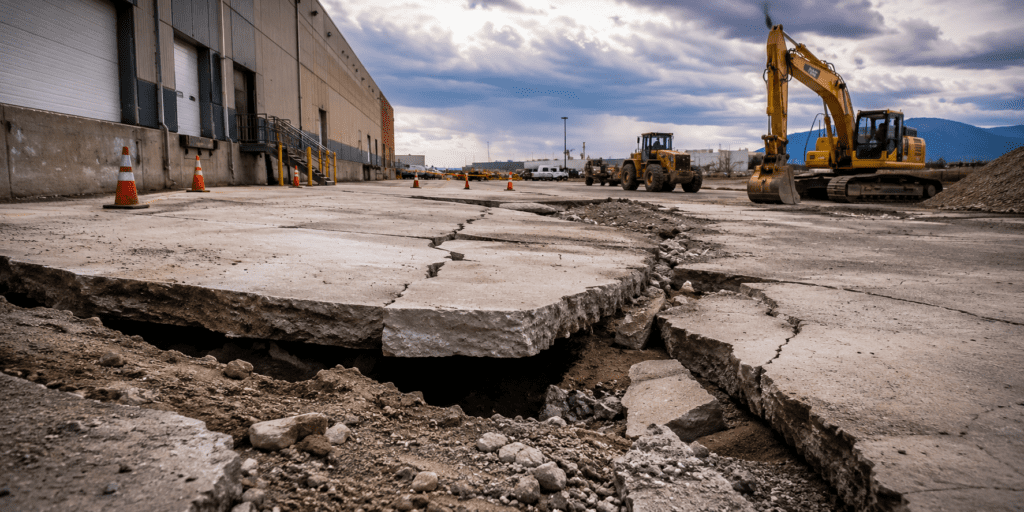
If the slab itself is structurally compromised with large cracks, spalling, or pitting, lifting won’t restore it. The crack will remain. In these cases, removing and replacing damaged sections might be necessary. However, many property owners are surprised to learn that foam lifting can coexist with replacement: we can lift the surrounding area to proper elevation, then pour a matched section in the settled area, creating a seamless result.
Extensive Soil Failure
Occasionally, the settling is caused by catastrophic soil failure—a sinkhole, a broken underground pipe, or extensive erosion. In these cases, the soil itself must be remediated before concrete repair. This might involve filling the void with expanded foam, compacting new engineered fill, or installing stabilizing systems like helical piers.
At Rhino Foundation Systems, we diagnose these conditions and recommend the right solution, not just the most profitable one for us.
Active Slope Movement
On properties with significant grade changes or active soil creep, concrete lifting provides temporary stability but doesn’t stop the underlying earth movement. Slope stabilization or retaining walls become necessary. Again, diagnosis precedes repair.
What to Ask a Concrete Lifting Contractor
If you’re considering professional repair, asking the right questions prevents costly mistakes:
- How do you diagnose the cause? A quality contractor will investigate why the concrete settled, not just fix the visible problem. If they don’t ask about drainage, soil conditions, or history, move to the next contractor.
- What material are you recommending and why? They should explain the trade-offs between polyurethane foam and mudjacking, specific to your situation. Generic recommendations suggest insufficient analysis.
- Do you provide a written warranty? Professional lifts should include a 5–10 year warranty against re-settling. If they won’t warrant the work, they’re not confident in their method.
- What’s the timeline? For commercial applications, understanding whether repair takes 2 hours or 2 days matters operationally. Confirm their estimate before committing.
- How do you ensure even lift? Quality contractors use precision equipment to monitor pressure and elevation during injection. Ask about their monitoring process.
- Will you remove any cause of settling? A good contractor doesn’t just lift and leave. They address drainage improvements, soil stabilization, or other preventive measures.
- Do you have references from commercial properties similar to mine? Residential and commercial work are fundamentally different. Ensure they have proven commercial experience.
The Long-Term Value of Professional Concrete Repair
A parking lot that’s been professionally leveled drains better. Vehicles don’t pool water or encounter unexpected depressions. Tenants perceive the property as well-maintained. Liability risk drops.
A commercial entryway that’s been lifted with precision polyurethane foam looks the same as it did before settling began. ADA compliance is maintained. First impressions remain strong.
A leveled warehouse floor ensures equipment operates safely. Forklifts don’t bounce or tip. Operations run smoothly.
These aren’t just cosmetic improvements. They’re foundational to long-term property value and operational safety.
Next Steps: Getting Your Commercial Concrete Evaluated
If you’re seeing sunken concrete on your commercial property, the first step is to have a contractor experienced in commercial projects conduct a professional evaluation.
That evaluation should include:
- Elevation measurements of the affected area
- Identification of the underlying cause
- Material recommendation with justification
- Transparent pricing with no surprises
- A warranty backing the work
At Rhino Foundation Systems, we’ve spent over 40 years helping Utah commercial property owners solve foundation and concrete problems. We combine that deep experience with precision equipment and a commitment to transparency. We’ll tell you exactly what’s happening, why it’s happening, and what the best solution is.
Ready to stop worrying about sunken concrete? Contact us for a free evaluation and estimate. We’ll be honest about what you need and provide a solution that protects your property, your liability, and your budget.